

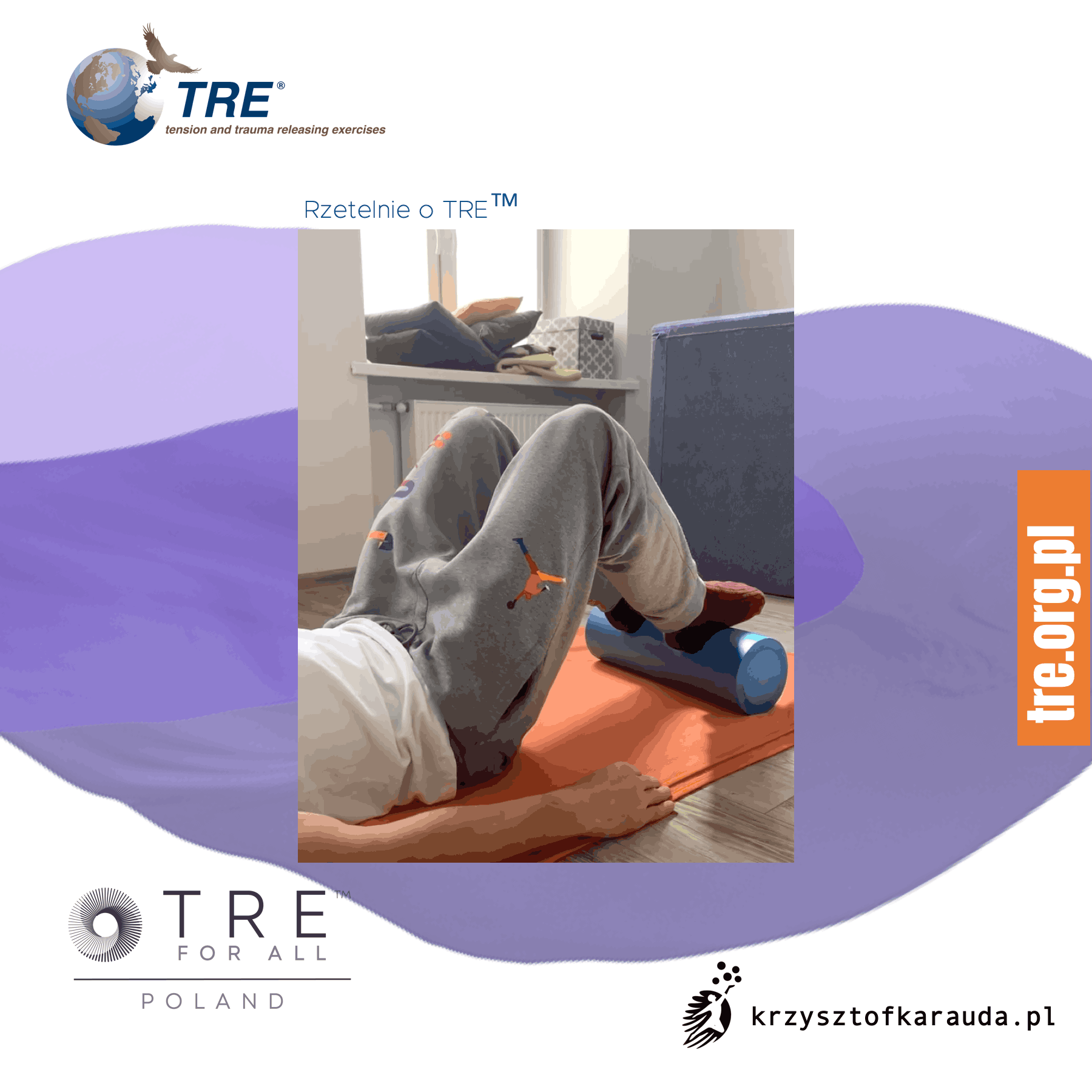
W TRE™ stosujemy różne interwencje. Jeśli sesję prowadzi Provider TRE™, najważniejszą interwencją jest jego obecność – emocjonalnie dostępna, otwarta, responsywna. Pracując dłuższy czas z jedną osobą można zauważyć subtelne wzorce pulsacji ciała, zmian jakości i dynamiki ruchu. Wtedy też mogą się pojawić inspiracje dotyczące interwencji. Propozycja może pojawić się zarówno ze strony klienta jak i Providera. W tym przypadku klient rozważył mój pomysł związany z podparciem stóp okrągłym wałkiem z gładką powierzchnią. W tej pozycji stopy nie mogą swobodnie oprzeć się ponieważ muszą dodatkowo trzymać wałek. Ciało wykonuje dodatkową pracę – pracują mięśnie tułowia. Do przytrzymania wałka klient może na zmianę używać mięśni: brzucha, pleców lub ud. Jak się okazało, dla procesu klienta miało to sens. Pojawiło się więcej ruchu w obrębie brzucha i klatki piersiowej a także stopy. Położenie jednej nogi na wałku blokuje go, dzięki czemu mogą pojawić się nowe doznania i ruchy, wzbogacając proces klienta.
In TRE™, we use a variety of interventions. If a TRE™ Provider run the session, the most important intervention is their presence – emotionally available, open, and responsive. Working with one person for a longer period of time, you can notice subtle patterns of body pulsation, changes in the quality and dynamics of movement. This can also lead to inspiration for interventions. Suggestions can come from both the client and the Provider. In this case, the client considered my idea of supporting their feet with a round roller with a smooth surface. In this position, the feet cannot rest freely because they must also hold the roller. The body performs additional work – the core muscles engage. The client can alternately use the abdominal, back, or thigh muscles to hold the roller. As it turned out, this made sense for the client’s process. More movement occurred in the abdominal and chest areas, as well as in the feet. Placing one leg on the roller locks it, allowing for new sensations and movements to emerge, enriching the client’s process.


0 komentarzy